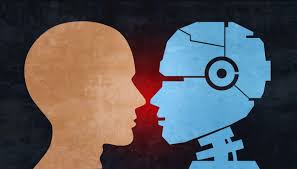
Human-in-the-loop systems are reshaping how we design intelligent technology by keeping people actively involved in decision-making processes rather than fully replacing them. As AI systems grow more powerful, trust becomes less about accuracy alone and more about transparency, control, and accountability. Designing for trust means creating systems where users can understand, guide, and override automated decisions when necessary. By blending human judgment with machine efficiency, these systems not only reduce risk and bias but also build confidence in AI-driven outcomes, making technology more reliable, ethical, and aligned with real-world needs.
Human-in-the-Loop Systems: Designing for Trust
Human-in-the-loop (HITL) systems have become one of the most important architectural and philosophical ideas in modern technology, especially as artificial intelligence moves from experimental tools into critical decision-making environments. At its core, a human-in-the-loop system is one where humans are not replaced by machines, but instead are intentionally embedded within automated workflows to supervise, validate, correct, or guide machine outputs. This design approach is not just a technical choice; it is a trust strategy. It acknowledges a fundamental reality of artificial intelligence today: no matter how advanced models become, they are still imperfect, probabilistic systems that can fail in unpredictable ways.
The concept of HITL is not new. It has existed for decades in aviation, medical diagnostics, financial trading, and industrial automation. However, what has changed in recent years is the scale and speed at which decisions are being delegated to algorithms. Machine learning systems now generate medical recommendations, filter job applicants, detect fraud, moderate content, and even assist in legal analysis. As these systems become more powerful, the question is no longer whether machines can perform tasks, but whether humans should still remain part of the decision loop, and if so, how that involvement should be structured to ensure reliability, safety, and trust.
Designing for trust in human-in-the-loop systems requires a deeper understanding of what trust actually means in a technological context. Trust is not blind confidence in accuracy; it is a calibrated relationship between human judgment and machine capability. Users trust a system when they understand its limits, when they can predict its behavior within a reasonable range, and when they believe that failures will not be catastrophic or hidden. In HITL systems, trust is distributed between human operators and machine intelligence. The machine provides speed, scale, and pattern recognition, while the human provides context, ethical reasoning, and situational awareness.
One of the most critical aspects of designing HITL systems is determining where in the workflow human intervention should occur. Some systems require humans to validate every output before action is taken, such as in high-risk medical imaging diagnostics. Others use humans only when the system’s confidence is low or when anomalies are detected. This creates a spectrum of human involvement ranging from continuous supervision to occasional auditing. The placement of humans in this loop directly affects system efficiency, accuracy, and user trust. If humans are involved too frequently, the system becomes slow and inefficient. If they are involved too rarely, the system becomes opaque and potentially dangerous.
A major challenge in HITL design is cognitive overload. Humans are not good at continuously monitoring streams of machine-generated outputs for long periods. Fatigue, attention drift, and bias can degrade decision quality over time. This means that simply inserting a human into the loop is not enough. The system must be designed in a way that supports human cognition rather than overwhelms it. Effective HITL systems prioritize clarity, highlight uncertainty, and surface only the most relevant information for human review. They also use intelligent filtering mechanisms to ensure that human attention is focused where it is most needed.
Another key dimension of trust in HITL systems is explainability. Humans cannot meaningfully supervise or correct a system if they do not understand why it made a particular decision. Black-box models, especially deep learning systems, create a tension between performance and interpretability. To bridge this gap, modern HITL systems increasingly incorporate explainable AI techniques that provide human-readable justifications for outputs. These explanations are not perfect representations of internal model logic, but they serve as approximations that help humans evaluate whether a decision is reasonable or not. Without this layer of interpretability, human oversight becomes superficial and trust becomes fragile.
Trust is also shaped by feedback loops between humans and machines. In well-designed HITL systems, human corrections are not just final overrides; they become learning signals that improve future model performance. This creates a dynamic relationship where the system evolves based on human expertise. Over time, this reduces the frequency of human intervention while improving overall system accuracy. However, this process must be carefully managed to avoid reinforcing human bias. If human feedback is consistently biased or inconsistent, the system may learn incorrect patterns, leading to degraded performance at scale.
In high-stakes domains, such as healthcare or autonomous driving, HITL systems are often designed with redundancy and fail-safes. The human acts as the final authority in ambiguous cases, but the system itself is designed to detect uncertainty and escalate appropriately. This escalation mechanism is crucial for trust. Users need to believe that the system knows when it does not know. A system that confidently makes incorrect decisions is far more dangerous than one that defers to human judgment when uncertain. Therefore, uncertainty estimation becomes a central technical requirement in HITL design.
Trust is also influenced by transparency in system boundaries. Users must understand what the machine is responsible for and what the human is responsible for. Ambiguity in responsibility can lead to blame shifting when failures occur. Clear role definition ensures accountability and improves confidence in the system. In some cases, this means explicitly designing interfaces that show when a decision was machine-generated versus human-approved, creating a traceable decision history.
Another important aspect of HITL systems is timing. The value of human input is highly sensitive to when it is introduced. Real-time systems, such as fraud detection or content moderation, require extremely fast human feedback cycles, which can be difficult to maintain at scale. In contrast, offline systems, such as model training or data labeling, allow for slower but more thoughtful human involvement. Designing trust requires aligning the speed of automation with the availability of human oversight in a way that does not compromise either safety or usability.
As artificial intelligence systems become more autonomous, there is also a philosophical shift happening in how we think about control. HITL is not just about adding humans into machines; it is about redefining what it means to remain in control in an age of intelligent systems. Full automation may be efficient, but it often lacks accountability. Human-in-the-loop systems preserve a form of moral and operational responsibility that pure automation cannot provide. This is especially important in domains where consequences are irreversible or ethically complex.
However, HITL systems are not a perfect solution. There is always a tension between scalability and meaningful human involvement. As systems scale to millions or billions of decisions per day, it becomes impossible for humans to review everything. This forces designers to prioritize which decisions truly require human oversight and which can safely remain automated. The future of HITL systems is therefore not about maximizing human involvement, but about optimizing its impact.
Ultimately, designing for trust in human-in-the-loop systems is about balance. It is about combining the strengths of machines with the irreplaceable judgment of humans in a way that is efficient, transparent, and resilient. Trust is not a static property of a system; it is continuously earned through consistent performance, clear communication, and responsible design. As technology continues to evolve, the most successful systems will not be those that eliminate humans, but those that integrate them intelligently, preserving accountability while unlocking the full potential of artificial intelligence.