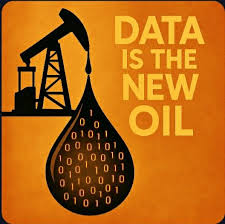
“Data is the new oil” has been a familiar phrase for years, but the paradigm is shifting. In today’s AI-driven landscape, synthetic data—artificially generated rather than collected from real-world interactions—is emerging as a powerful alternative. It promises scalability, privacy protection, and faster model training, yet raises questions about accuracy, bias, and long-term reliability. As organizations lean less on raw human data and more on machine-generated datasets, the real value is no longer just in owning data, but in shaping it.
The phrase “data is the new oil” has been repeated so often that it risks sounding like a cliché, yet its core truth has only deepened over time. In the early days of the analogy, data was compared to crude oil because, like oil, it was a raw resource—valuable, but only after refinement. Companies that could collect, clean, and analyze vast amounts of data gained a competitive advantage much like industrial powers that mastered oil extraction and processing. But something fundamental has shifted. We are no longer operating in a world where data is only extracted from reality. Increasingly, it is being **manufactured**. The new frontier is not just data abundance—it is **synthetic data**, and it is redefining what “data as a resource” actually means.
Synthetic data refers to information that is artificially generated rather than directly collected from real-world events. It is created using algorithms, simulations, or generative models that learn patterns from existing datasets and produce new, statistically similar data. At first glance, this may seem like a secondary or inferior substitute for “real” data, but that assumption is rapidly becoming outdated. In many cases, synthetic data is not just a replacement; it is an enhancement. It can be tailored, scaled infinitely, stripped of sensitive information, and engineered to fill gaps that real-world data cannot easily address.
The rise of synthetic data is inseparable from the evolution of artificial intelligence, particularly generative models. Systems that once depended entirely on historical datasets are now capable of producing new data points that mimic the structure and distribution of reality. This capability is quietly transforming industries. In sectors like healthcare, finance, autonomous driving, and cybersecurity, the limitations of real data have always been a bottleneck. Data can be scarce, expensive, biased, or restricted due to privacy concerns. Synthetic data bypasses many of these constraints by enabling controlled environments where data can be generated on demand, without violating confidentiality or waiting years for sufficient real-world accumulation.
Consider the case of autonomous vehicles. Training a self-driving system requires exposure to countless driving scenarios, including rare and dangerous situations such as near-collisions or extreme weather conditions. Gathering this data in the real world is not only difficult but potentially hazardous. Synthetic data allows engineers to simulate these scenarios safely and repeatedly, ensuring that AI systems are prepared for edge cases that might never occur frequently enough in natural datasets. In this context, synthetic data is not just convenient—it is essential.
Beyond solving scarcity, synthetic data is also addressing one of the most persistent problems in data science: bias. Real-world data often reflects existing inequalities, imbalances, and systemic distortions. When machine learning models are trained on such data, they can inadvertently perpetuate or even amplify these biases. Synthetic data offers the possibility of rebalancing datasets by deliberately generating more representative samples. While this does not automatically eliminate bias, it provides a powerful tool for mitigation that was previously unavailable.
However, the transition from real to synthetic data is not without its complexities. One of the central challenges is ensuring that synthetic data maintains fidelity to real-world patterns without simply duplicating or leaking sensitive information. If a synthetic dataset is too close to the original, it risks compromising privacy; if it is too abstract, it may lose practical value. Striking this balance requires sophisticated techniques and careful validation. It also raises important questions about trust. When data is no longer directly observed but instead generated, how do we verify its accuracy? How do we ensure that models trained on synthetic data perform reliably in real-world conditions?
There is also a deeper philosophical shift underway. Traditionally, data has been viewed as a reflection of reality—a passive record of what has happened. Synthetic data challenges this notion by introducing a layer of intentionality. Data is no longer just observed; it is designed. This transforms the role of data scientists and engineers from mere analysts into creators. They are not only interpreting data but also shaping the datasets that will inform future decisions. In this sense, synthetic data blurs the boundary between simulation and reality, raising questions about what it means to “know” something in a data-driven world.
Economically, the implications are profound. If data was once compared to oil because it was scarce and valuable, synthetic data introduces the possibility of abundance. But abundance does not necessarily reduce value; it shifts where value is created. In the oil industry, the most valuable players were not always those who owned the raw resource, but those who refined it, distributed it, and built infrastructure around it. Similarly, in the era of synthetic data, the competitive advantage is moving toward those who can generate high-quality synthetic datasets, validate them effectively, and integrate them into AI systems at scale. The focus is shifting from data collection to data generation and orchestration.
At the same time, synthetic data is reshaping the conversation around privacy. One of its most compelling advantages is the ability to create datasets that do not correspond to real individuals, thereby reducing the risk of exposing personal information. This has significant implications for industries that are heavily regulated, such as healthcare and finance, where data access is often restricted. By using synthetic data, organizations can share insights, train models, and collaborate across boundaries without compromising sensitive information. Yet, this benefit comes with its own caveats. If synthetic data is derived from real datasets, there is always a possibility—however small—of unintended information leakage. Ensuring robust privacy guarantees remains an ongoing challenge.
Another dimension worth considering is the feedback loop that synthetic data introduces. As AI systems generate more data, and that data is used to train new models, there is a risk of creating a self-referential cycle. This phenomenon, sometimes referred to as model collapse, can lead to a gradual degradation of quality if not carefully managed. When models learn from data that was itself generated by other models, subtle errors and distortions can accumulate over time. This underscores the importance of maintaining a connection to high-quality real-world data, even as synthetic data becomes more prevalent.
The cultural and societal impact of synthetic data is also significant. In a world where data can be generated at will, the line between authenticity and fabrication becomes increasingly blurred. This is not just a technical issue but a social one. Trust in data has always been a cornerstone of decision-making, whether in business, science, or governance. As synthetic data becomes more widespread, there will be a growing need for transparency about how data is created and used. Without this transparency, the risk of misinformation and manipulation increases.
Despite these challenges, it is clear that synthetic data is not a passing trend but a foundational shift. It represents a move from a world where data is harvested to one where it is engineered. This does not render real data obsolete; rather, it changes its role. Real data becomes the anchor, the reference point against which synthetic data is calibrated. The two are not competitors but complements, each serving a distinct purpose in the broader data ecosystem.
In many ways, the analogy of data as oil still holds, but it requires an update. If real-world data is crude oil, then synthetic data is something closer to a refined, engineered fuel—customized for specific applications, produced at scale, and optimized for performance. The value is no longer just in extraction but in creation, transformation, and application. This shift has profound implications for how organizations think about data strategy, how engineers build AI systems, and how society navigates the ethical and practical challenges of a data-driven future.
Ultimately, the rise of synthetic data forces a reconsideration of what data is and what it can be. It is no longer merely a byproduct of human activity; it is becoming a designed resource, shaped by algorithms and guided by intent. This transformation opens up new possibilities while introducing new responsibilities. As with any powerful technology, the question is not just what can be done, but what should be done. The answer will determine how this new era of data unfolds and whether it fulfills its promise as a force for innovation, equity, and progress.