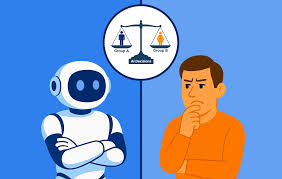
Bias in AI systems reflects the data, assumptions, and priorities embedded in their design, making complete elimination unlikely. While advances in fairness techniques and better datasets can significantly reduce harmful outcomes, bias often evolves alongside society itself. The real challenge is not achieving perfect neutrality, but building transparent, accountable systems that continuously detect, measure, and mitigate bias as it emerges.
Bias in artificial intelligence systems sits at the intersection of technology, society, and human imperfection. The question of whether it can ever be fully eliminated is not just a technical one; it is philosophical, political, and deeply practical. To understand the challenge, one must first recognize that AI systems are not independent thinkers. They are reflections—compressed, accelerated, and sometimes distorted reflections—of the data they are trained on and the objectives they are designed to optimize. In that sense, bias in AI is less a foreign defect and more an inherited trait.
At its core, bias in AI arises because machine learning models learn patterns from historical data. That data is produced by human activity, and human activity is shaped by unequal systems, cultural norms, and historical imbalances. When an AI system is trained on such data, it does not merely learn neutral facts; it absorbs correlations, including those that reflect discrimination or structural inequality. For example, if historical hiring data shows a preference for certain demographics, a model trained on that data may replicate or even amplify those preferences, not because it “intends” to discriminate, but because it is optimizing for patterns that appear statistically significant.
This raises a critical issue: bias is not always obvious. Some biases are explicit and measurable, such as disparities in error rates between demographic groups. Others are subtle, embedded in language, context, or representation. A language model, for instance, may associate certain professions with particular genders or ethnicities based on patterns in its training data. These associations may not be consciously encoded by developers, yet they emerge through statistical learning. The complexity of modern AI systems, especially deep learning models, makes it difficult to trace exactly how such biases form and propagate.
Efforts to mitigate bias typically fall into several categories, though none provide a complete solution. One approach focuses on improving the quality and diversity of training data. By ensuring that datasets are more representative of different populations, developers can reduce the risk of skewed outcomes. However, this is easier said than done. Data collection itself is shaped by access, geography, and historical context. In many parts of the world, especially underrepresented regions, there is simply less digital data available. Even when data is collected, decisions about labeling, categorization, and inclusion introduce subjective judgments that can carry bias.
Another approach involves modifying algorithms to enforce fairness constraints. Researchers have developed techniques that attempt to equalize outcomes across groups or minimize disparities in predictions. While these methods can be effective in controlled scenarios, they often involve trade-offs. Improving fairness along one dimension may reduce accuracy or introduce new forms of bias elsewhere. For instance, enforcing equal error rates across groups might lead to overcorrection, where the system performs worse overall or disadvantages another group. Fairness itself is not a single, universally agreed-upon concept; it has multiple definitions, and these definitions can conflict with one another.
There is also growing emphasis on transparency and interpretability. If developers and users can better understand how an AI system makes decisions, they are more likely to detect and address bias. Techniques such as model explainability aim to reveal which features influence predictions and how strongly. Yet, transparency has limits. Many high-performing AI models are inherently complex, and simplifying their behavior for human understanding can obscure important details. Moreover, even when explanations are available, interpreting them correctly requires expertise that not all stakeholders possess.
Human oversight is often presented as a safeguard against biased AI decisions. The idea is that humans can review and correct outputs, especially in high-stakes domains such as healthcare, finance, and criminal justice. However, this introduces another layer of complexity. Humans themselves are not free from bias, and their judgments can reinforce or override algorithmic decisions in unpredictable ways. In some cases, people may overtrust AI systems, assuming they are more objective than they actually are. In others, they may distrust them entirely, even when the system performs better than human judgment on average.
The persistence of bias in AI is also tied to incentives and real-world constraints. Organizations deploying AI systems often prioritize efficiency, scalability, and profitability. Addressing bias can require additional resources, longer development cycles, and ongoing monitoring. Without strong regulatory frameworks or public pressure, there may be little motivation to invest deeply in fairness. Even when companies commit to ethical AI principles, translating those principles into consistent practice across complex systems is a formidable challenge.
Regulation is beginning to play a role in shaping how bias is addressed. Governments and international bodies are introducing guidelines and laws that require transparency, accountability, and fairness in AI systems. These efforts signal a recognition that bias is not just a technical issue but a societal one. However, regulation faces its own limitations. Technology evolves rapidly, often outpacing policy. There is also the risk of overregulation, which could stifle innovation or create barriers for smaller organizations that lack the resources to comply.
The global dimension of AI bias further complicates the picture. Most advanced AI systems are developed in a handful of countries, yet they are deployed worldwide. This can lead to mismatches between the cultural context of the training data and the realities of users in different regions. For example, a system trained primarily on data from Western contexts may not perform well or fairly in African, Asian, or Latin American settings. Addressing this requires not only technical adjustments but also a broader shift toward inclusive AI development that involves diverse perspectives and local expertise.
Given all these factors, the question of complete elimination becomes clearer. Bias in AI cannot be fully eradicated because it is rooted in the very processes that make AI possible: learning from data, optimizing for patterns, and operating within human-defined objectives. As long as data reflects an imperfect world and humans define the goals and constraints of AI systems, some degree of bias will persist. The goal, therefore, is not absolute elimination but continuous management, reduction, and accountability.
This perspective shifts the focus from seeking a perfect solution to building resilient systems. It emphasizes the importance of ongoing evaluation, where AI models are regularly tested for bias and updated as new data becomes available. It also highlights the need for interdisciplinary collaboration, bringing together technologists, ethicists, policymakers, and affected communities. Bias is not a problem that can be solved in isolation; it requires collective effort and sustained attention.
Ultimately, bias in AI serves as a mirror, reflecting both the strengths and shortcomings of human society. It challenges us to confront uncomfortable truths about inequality and representation, even as we build systems that promise efficiency and innovation. While complete elimination may be unattainable, meaningful progress is not only possible but necessary. By acknowledging the limits of technology and committing to responsible development, we can create AI systems that are not perfectly unbiased, but significantly more fair, transparent, and aligned with human values than those that came before.