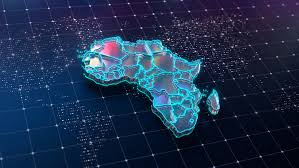
As artificial intelligence reshapes industries worldwide, Africa faces a critical challenge: most AI systems are trained on data that barely reflects its realities. From language and culture to economic patterns, this mismatch limits the effectiveness and fairness of global models on the continent. Building an African AI ecosystem powered by local data is not just about inclusion—it’s about accuracy, innovation, and digital independence. By investing in homegrown datasets, infrastructure, and talent, Africa can create AI solutions that truly understand its people and unlock opportunities tailored to its unique context.
The conversation around artificial intelligence has, for the most part, been dominated by a handful of countries, companies, and datasets that reflect only a narrow slice of the world’s realities. Yet AI, by its very nature, is meant to be universal—adaptive, intelligent, and responsive to human needs across cultures and geographies. This contradiction becomes especially clear when examining Africa’s place in the global AI landscape. The continent is not short of data, talent, or problems worth solving. What it lacks is a deeply rooted, self-sustaining AI ecosystem built on its own local data, priorities, and realities. The idea of “local data, global models” is not just a technical discussion; it is a question of digital sovereignty, economic empowerment, and cultural preservation.
Africa generates massive amounts of data every day, from mobile money transactions and social media activity to agricultural outputs, health records, and informal market behaviors. However, most of this data is either underutilized, exported, or structured in ways that do not feed into globally dominant AI systems. The models powering today’s most advanced AI technologies are largely trained on datasets originating from North America, Europe, and parts of Asia. This creates a fundamental mismatch. When these models are deployed in African contexts, they often fail to understand local languages, misinterpret cultural nuances, and produce outputs that are at best irrelevant and at worst harmful. An AI system that cannot accurately process Yoruba, Swahili, Hausa, or Amharic is not globally intelligent; it is geographically biased.
The implications of this gap extend far beyond language. Consider agriculture, which employs a significant portion of Africa’s population. AI models trained on Western farming data may not account for local soil conditions, weather patterns, or indigenous farming techniques. Similarly, in healthcare, diagnostic tools built on non-African datasets may struggle to identify diseases as they manifest in African populations, leading to misdiagnosis or ineffective treatment recommendations. These are not minor inefficiencies; they are systemic failures that highlight why importing AI solutions without localization is fundamentally flawed.
Building an African AI ecosystem begins with recognizing the value of local data—not just as raw input, but as a strategic asset. Data reflects lived experiences, economic behaviors, linguistic diversity, and cultural identity. When properly collected, cleaned, and structured, it becomes the foundation upon which relevant and impactful AI systems can be built. However, data alone is not enough. There must be infrastructure to store and process it, policies to govern its use, and talent capable of transforming it into intelligent systems. This is where the concept of an ecosystem becomes critical. It is not about isolated projects or startups; it is about creating an interconnected environment where governments, universities, private companies, and communities collaborate.
One of the major challenges is infrastructure. Training and deploying modern AI models require significant computational resources, including high-performance GPUs and reliable cloud services. Much of this infrastructure is currently owned and operated خارج the continent, which introduces dependency and increases costs. For Africa to build its own AI ecosystem, there must be investment in local data centers, cloud platforms, and edge computing solutions. This does not necessarily mean replicating Silicon Valley, but rather developing context-appropriate infrastructure that balances performance with accessibility.
Equally important is talent development. Africa is home to a rapidly growing population of young, tech-savvy individuals, many of whom are already contributing to global tech ecosystems. However, there is often a disconnect between education and industry needs. Building a strong AI ecosystem requires not just coders, but researchers, data scientists, ethicists, and domain experts who understand local challenges. Universities must evolve their curricula to include practical AI training, while governments and private organizations should invest in mentorship programs, research funding, and innovation hubs. When talent is nurtured locally, it is more likely to remain and contribute to solving local problems.
Another critical dimension is policy and governance. Data sovereignty is becoming an increasingly important issue worldwide, and Africa cannot afford to be passive in this regard. Without clear policies, local data can be extracted, monetized, and controlled by external entities, leaving little value behind for the communities that generated it. Governments must establish frameworks that protect data rights while still encouraging innovation. This includes regulations حول data privacy, cross-border data flows, and ethical AI usage. The goal is not to restrict progress, but to ensure that it benefits the continent rather than exploits it.
The role of startups and innovation hubs cannot be overstated. Across cities like Lagos, Nairobi, Cape Town, and Kigali, a new generation of entrepreneurs is building solutions tailored to African realities. These startups are uniquely positioned to leverage local data because they operate within the environments they aim to serve. Whether it is fintech platforms analyzing informal credit patterns or health-tech solutions addressing region-specific diseases, these innovations demonstrate what is possible when AI is grounded in local context. However, many of these startups face funding challenges, often relying on foreign investment that may come with external priorities. Strengthening local investment ecosystems is essential to ensure that African innovation remains aligned with African needs.
There is also a cultural dimension that is often overlooked. AI systems are not neutral; they reflect the values and assumptions embedded in their training data. If Africa does not actively participate in shaping AI, it risks having its narratives defined by others. Language models that do not understand local idioms, recommendation systems that overlook regional preferences, and content moderation tools that misinterpret cultural expressions all contribute to a form of digital marginalization. Building local AI systems is, therefore, also about preserving identity and ensuring representation in the digital age.
At the same time, the idea is not to isolate Africa from global AI development. The phrase “local data, global models” suggests a hybrid approach. Africa can both contribute to and benefit from global advancements while maintaining control over its data and priorities. Collaboration with international institutions, open-source communities, and global tech companies can accelerate progress, but it must be done on equitable terms. Partnerships should focus on knowledge transfer, joint research, and capacity building rather than one-sided extraction.
The economic potential of a robust African AI ecosystem is enormous. AI has the capacity to transform industries, improve efficiency, and create new markets. From optimizing supply chains to enhancing financial inclusion, the applications are vast. By building its own ecosystem, Africa can move from being a consumer of technology to a producer, capturing more value within its economies. This shift is crucial for long-term development, as it reduces dependency and fosters resilience.
Ultimately, the question is not whether Africa should build its own AI ecosystem, but how quickly and effectively it can do so. The foundations are already in place: a young population, increasing digital adoption, and a growing awareness of AI’s importance. What is needed now is coordinated action. Governments must prioritize digital infrastructure and policy. Educational institutions must align with industry needs. Private sector players must invest in local innovation. And perhaps most importantly, there must be a collective mindset shift that recognizes data as a strategic resource rather than a byproduct.
In a world increasingly shaped by artificial intelligence, those who control data and models will shape the future. For Africa, the path forward lies in leveraging its local data to build systems that reflect its realities, solve its problems, and amplify its voice on the global stage. Without this, the continent risks being perpetually on the receiving end of technologies that were never designed for it. With it, Africa has the opportunity to define a new paradigm—one where AI is not just global in reach, but truly inclusive in its intelligence.