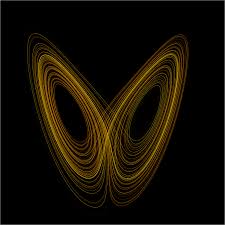
Chaos Computing: Exploiting Nonlinear Dynamics for Problem Solving explores a cutting-edge approach to computation that leverages the unpredictable yet structured behavior of nonlinear systems. Unlike traditional deterministic computing, chaos computing uses the inherent complexity of chaotic systems to perform calculations, optimize processes, and solve problems that are otherwise intractable for conventional algorithms. This blog delves into how small variations in initial conditions can be harnessed to generate diverse computational pathways, the potential applications in cryptography, optimization, and machine learning, and the theoretical foundations that make chaotic systems a promising frontier for next-generation computing.
The term "chaos" often evokes images of unpredictability, randomness, or disorder. In physics, mathematics, and complex systems, chaos describes deterministic systems that are extremely sensitive to initial conditions, where tiny changes can produce dramatically different outcomes. While this sensitivity is often seen as a challenge to control, in recent years researchers and technologists have begun exploring chaos as a powerful computational resource—a concept known as chaos computing. Unlike traditional computing paradigms that rely on linear, predictable logic, chaos computing leverages the rich dynamics of nonlinear systems to solve complex problems that are difficult, inefficient, or even impossible to tackle with conventional approaches.
At the heart of chaos computing lies the principle of nonlinear dynamics. Nonlinear systems are governed by equations in which the output is not directly proportional to the input, resulting in feedback loops, bifurcations, and intricate behaviors that cannot be easily predicted from initial states. Such systems are ubiquitous in nature, from weather patterns and turbulent fluid flows to population dynamics in ecosystems and neural activity in the brain. By mimicking or directly harnessing these nonlinear behaviors, engineers and scientists can construct computational systems capable of performing tasks in novel ways. Instead of relying on sequences of deterministic logic gates, a chaotic system explores a multidimensional state space where solutions can emerge spontaneously from the interplay of variables.
One of the most promising applications of chaos computing is in optimization problems. Many real-world challenges, such as designing efficient transportation networks, optimizing energy grids, or training deep neural networks, involve searching for the best configuration among an astronomically large set of possibilities. Classical algorithms often struggle because they are trapped in local minima or require exhaustive exploration. Chaotic systems, on the other hand, can navigate complex solution landscapes more effectively. The inherent sensitivity and nonlinear oscillations allow such systems to explore multiple potential solutions simultaneously, naturally escaping local minima and converging toward global optima more efficiently. Researchers have demonstrated that circuits based on chaotic oscillators can solve NP-hard problems, such as the traveling salesman problem, faster than traditional digital computers for certain instances.
Another frontier for chaos computing is analog hardware. While most modern computers operate digitally using binary logic, analog chaotic circuits exploit the continuous evolution of voltage, current, or other physical quantities to perform computation. These systems can operate at extremely high speeds and with low energy consumption, particularly when simulating complex networks or performing parallel computations. Coupled chaotic oscillators, memristive devices, and laser-based chaotic systems have all been investigated as potential substrates for this new form of computation. The key advantage is that chaotic dynamics can naturally encode, process, and transform information in ways that are fundamentally different from binary logic, enabling innovative approaches to signal processing, pattern recognition, and even encryption.
Chaos computing is also drawing inspiration from neuroscience. The human brain is an inherently nonlinear system, with neuronal circuits exhibiting oscillatory, chaotic, and self-organizing behaviors. Cognitive processes such as learning, memory, and sensory perception exploit these dynamics to process information efficiently. By modeling artificial systems on chaotic neural networks, researchers hope to create machines capable of adaptive, context-sensitive computation that can rival certain aspects of human intelligence. Chaotic networks offer high-dimensional representations of data, allowing subtle patterns to emerge from noisy or incomplete inputs, which is particularly valuable in fields such as machine learning, autonomous robotics, and cognitive signal analysis.
Despite its promise, chaos computing faces significant challenges. Nonlinear systems are notoriously difficult to control, and small perturbations can lead to unintended behaviors. Designing hardware and algorithms that reliably harness chaos without devolving into unpredictability requires deep understanding of bifurcation theory, attractor dynamics, and system stability. Moreover, translating the analog dynamics of chaos into actionable outputs in a digital-dominated world presents additional engineering hurdles, particularly in measurement, interfacing, and error correction. Nevertheless, advances in memristor technology, optical computing, and programmable chaotic circuits are steadily overcoming these barriers, pointing toward practical implementations in the near future.
The implications of chaos computing extend beyond pure computation. By embracing the complexity inherent in nonlinear systems, researchers are challenging conventional notions of control, predictability, and problem-solving. Tasks previously considered intractable or computationally prohibitive may find solutions not through brute force, but through the elegant, emergent properties of chaotic dynamics. From optimizing logistics networks to decoding neural signals and enhancing artificial intelligence, chaos computing represents a paradigm shift in how we conceive and design computational systems.
In conclusion, chaos computing is not merely a theoretical curiosity; it is an emerging field that bridges physics, engineering, and computer science. By exploiting nonlinear dynamics and the sensitivity of chaotic systems, researchers are developing new approaches to optimization, analog computation, and intelligent systems. While the challenges are nontrivial, the potential benefits—high-speed computation, energy efficiency, and novel problem-solving capabilities—position chaos computing as a frontier technology for the coming decades. As our understanding deepens and experimental implementations mature, chaos may no longer be something to fear in computing—it may become one of our most powerful tools.