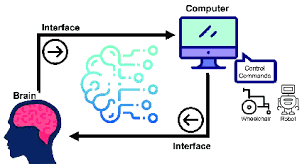
Cognitive Load-Adaptive Interfaces are revolutionizing the way humans interact with technology by creating systems that respond in real time to the user’s mental state. Using a combination of sensors, AI algorithms, and brain-computer interface technology, these interfaces monitor cognitive load—how much mental effort a person is experiencing—and dynamically adjust information presentation, task complexity, or interface layout to optimize performance and reduce stress. This approach not only enhances productivity and learning but also opens new possibilities for personalized experiences in education, gaming, professional software, and accessibility tools. By bridging neuroscience and human-computer interaction, cognitive load-adaptive systems represent the next frontier in intuitive, intelligent technology design.
Cognitive load-adaptive interfaces represent a cutting-edge frontier in human-computer interaction, combining neuroscience, artificial intelligence, and interface design to create systems that respond dynamically to the mental state of the user. Traditional interfaces operate on the assumption that users have a consistent level of attention, working memory capacity, and cognitive availability. In reality, cognitive load fluctuates throughout the day, influenced by factors such as task complexity, environmental distractions, stress levels, and even fatigue. By designing systems that can detect and respond to these variations in real-time, researchers and engineers are pioneering interfaces that enhance performance, reduce errors, and improve user experience in profound ways.
The core principle behind cognitive load-adaptive interfaces is the continuous assessment of a user’s mental workload through physiological, behavioral, and neural indicators. Advances in non-invasive neuroimaging, including electroencephalography (EEG) and functional near-infrared spectroscopy (fNIRS), have made it possible to monitor brain activity in real-time without impeding natural interaction. Metrics such as frontal theta activity, P300 signals, and hemodynamic responses provide insight into working memory demands, attentional focus, and mental fatigue. Coupled with machine learning algorithms, these signals can be interpreted to determine the optimal way an interface should adapt.
Adaptation strategies in cognitive load-aware systems are highly diverse. For example, in knowledge-intensive applications such as air traffic control or surgical assistance, the interface might simplify visualizations, prioritize alerts, or delay non-critical notifications when cognitive load is high. In contrast, educational software can modulate content difficulty or pacing in real-time, tailoring learning experiences to the user’s capacity at any given moment. Even consumer electronics, such as smartphones or augmented reality devices, can benefit from these technologies by adjusting notification frequency, visual complexity, or interaction modalities based on inferred mental state. The goal is always to maintain an optimal cognitive balance: enough challenge to engage the user without overloading working memory or attention.
The design of such systems requires a sophisticated interplay between sensor technology, signal processing, and adaptive interface logic. Sensor fusion plays a critical role, integrating EEG data with eye tracking, heart rate variability, galvanic skin response, and other biometric signals to create a holistic picture of cognitive load. Machine learning models, particularly deep learning architectures, can identify subtle patterns and predict impending overload before the user experiences performance degradation. This predictive capability enables proactive adaptation, rather than reactive response, which is crucial in high-stakes environments where delays or errors can have significant consequences.
Despite the promise of cognitive load-adaptive interfaces, there are notable challenges. Signal noise, inter-individual variability, and the subtlety of neural indicators make robust, generalizable systems difficult to develop. Ethical considerations also emerge: systems that monitor brain activity raise questions about privacy, data ownership, and the potential for manipulation. Ensuring that adaptive mechanisms respect user autonomy while providing beneficial support requires careful design, transparency, and regulation. Additionally, the balance between automation and user control must be managed thoughtfully. Overly aggressive adaptation can frustrate users or reduce their engagement, while insufficient adaptation fails to leverage the system’s full potential.
The implications of this technology extend far beyond conventional computing. In education, cognitive load-adaptive interfaces could revolutionize personalized learning, enabling curricula that respond in real-time to a student’s mental effort and retention capabilities. In professional training, simulations that dynamically adjust difficulty based on the trainee’s cognitive load could accelerate skill acquisition while minimizing error-induced stress. In healthcare, patient-facing systems could optimize interaction and reduce mental strain for individuals undergoing complex decision-making or rehabilitation processes. The potential also extends to collaborative and remote work environments, where adaptive interfaces could mitigate cognitive overload during video conferencing, project management, or real-time collaborative editing.
Research in this domain is still evolving, but early implementations demonstrate promising results. Experimental interfaces that adjust task presentation based on EEG-derived cognitive load metrics have shown measurable improvements in accuracy, response time, and subjective user satisfaction. As sensor technology becomes more compact, affordable, and accurate, and as machine learning models become more capable of interpreting complex neural data, the integration of cognitive load-adaptive interfaces into everyday computing is increasingly feasible. The convergence of wearable neurotechnology, AI-driven adaptation, and human-centered design represents a paradigm shift: instead of forcing users to conform to static systems, technology can now flexibly conform to human cognitive states, creating a truly symbiotic interaction.
In conclusion, cognitive load-adaptive interfaces are poised to redefine the boundaries of human-computer interaction. By harnessing real-time insights into mental effort and attention, these systems offer unprecedented opportunities to enhance performance, learning, and user well-being. While technical and ethical challenges remain, ongoing advances in neuroscience, AI, and interface design suggest a future in which our devices do not merely respond to input—they anticipate and harmonize with the fluctuations of the human mind. In this vision, technology is not just a tool but a dynamic partner in cognition, capable of augmenting human capability while respecting the natural rhythms of thought and focus.