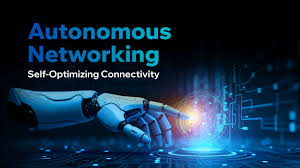
Self-Optimizing Networks explore a future where the internet evolves dynamically, guided by artificial intelligence that monitors, analyzes, and adapts network traffic in real time. Instead of relying on static configurations, these networks can detect congestion, anticipate failures, and reroute data instantly, improvng speed, reliability, and security. By leveraging AI-driven algorithms, self-optimizing networks promise a more resilient and intelligent digital infrastructure, enabling seamless communication for everything from streaming and gaming to critical cloud applications and global enterprise systems.
The Internet as we know it is no longer a static web of routers, servers, and cables; it is a living, breathing network whose complexity grows with every device, application, and user interaction. Traditional networking paradigms rely heavily on predefined routes, static configurations, and human intervention to ensure efficiency, security, and stability. However, the modern digital ecosystem is evolving too rapidly for manual management to keep up. Enter self-optimizing networks powered by artificial intelligence—a paradigm shift that promises to transform the very architecture of the Internet by enabling real-time, autonomous adaptation to changing conditions.
At its core, a self-optimizing network (SON) is a system that can automatically monitor, analyze, and adjust its operations to optimize performance without human intervention. Unlike conventional networks that follow rigid protocols and predefined routing tables, SONs leverage AI algorithms to understand traffic patterns, detect anomalies, predict bottlenecks, and dynamically reroute data to maintain optimal flow. This capability is particularly crucial as the Internet faces unprecedented challenges: exponential data growth, the proliferation of IoT devices, variable latency demands from streaming and gaming platforms, and the increasing need for resilience against cyberattacks.
The foundation of a self-optimizing network lies in its data-driven intelligence. Network nodes continuously collect vast amounts of telemetry data: packet flows, bandwidth usage, error rates, latency measurements, and security logs. AI models—especially those based on reinforcement learning and deep neural networks—interpret this data in real time. They do not merely respond to current conditions; they predict future states, such as congestion points or potential hardware failures, and take proactive measures to prevent service degradation. In this way, the network behaves almost like an organic entity, adapting and evolving as its environment changes.
One of the most compelling applications of AI-driven self-optimization is in traffic routing. In traditional networks, routing decisions are largely static or based on simple heuristics such as shortest-path calculations. However, shortest path does not always mean fastest or most reliable path, especially when network congestion, packet loss, or variable latency come into play. AI models can continuously evaluate multiple parameters simultaneously, considering historical traffic patterns, real-time measurements, and even external factors like weather conditions affecting undersea cables. The result is a network that can reroute data through optimal paths dynamically, balancing load, minimizing latency, and reducing the risk of outages.
Security is another area where self-optimizing networks excel. By continuously monitoring traffic patterns and detecting subtle anomalies, AI can identify threats that traditional rule-based systems might miss. For example, distributed denial-of-service (DDoS) attacks often exploit predictable network behavior. A self-optimizing network can recognize unusual traffic surges or packet anomalies and reroute, isolate, or throttle affected nodes to neutralize the threat without human intervention. In this sense, AI not only optimizes performance but also actively protects the integrity of the Internet.
The deployment of self-optimizing networks also has profound implications for edge computing. As IoT devices and smart sensors proliferate, vast amounts of data are generated at the network’s edge. Transporting all this data to centralized cloud servers is inefficient and introduces latency. AI-driven networks can decide in real time which data should be processed locally, which should be forwarded upstream, and which can be aggregated or discarded. This localized intelligence reduces bandwidth consumption, accelerates response times, and ensures that critical applications—autonomous vehicles, industrial robotics, telemedicine—receive low-latency, reliable connectivity.
Implementing such networks, however, is not without challenges. Training AI models to operate reliably in a distributed, high-stakes environment requires enormous amounts of diverse, high-quality data. The models must be robust against adversarial conditions, hardware failures, and unexpected traffic spikes. They also need to operate efficiently, as the computational overhead of constant optimization cannot compromise the very performance it aims to improve. Furthermore, integrating AI with legacy networking infrastructure demands careful orchestration to ensure backward compatibility and minimal disruption.
Despite these challenges, several real-world implementations demonstrate the transformative potential of self-optimizing networks. Telecom operators are already using AI to manage 5G networks, dynamically allocating spectrum, balancing load across cells, and predicting maintenance needs before outages occur. Cloud service providers are exploring AI-driven traffic management within data centers, achieving higher throughput and energy efficiency. Even the concept of a “self-healing Internet,” where autonomous AI systems repair and reconfigure the network during major outages or cyberattacks, is no longer science fiction.
Looking ahead, the convergence of AI, network virtualization, and edge computing will push the concept of self-optimizing networks further. Future networks may not only adapt in real time but also reconfigure their topology, deploy virtual nodes, and even negotiate bandwidth and routing autonomously across multiple providers. This level of intelligence could transform global connectivity, enabling seamless experiences for billions of devices while minimizing energy consumption, reducing latency, and enhancing security.
In conclusion, self-optimizing networks represent a profound shift in how the Internet operates. By embedding AI into the very fabric of network infrastructure, we move from static, human-managed systems to adaptive, intelligent networks capable of anticipating problems, optimizing performance, and defending against threats autonomously. As digital ecosystems become ever more complex, self-optimizing networks are not just an innovation—they are an essential evolution, reshaping the Internet into a dynamic, resilient, and intelligent system capable of meeting the demands of the 21st century and beyond.