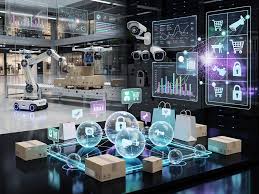
Explore the emerging world of Machine-to-Machine (M2M) commerce, where AI agents act as autonomous economic actors—making decisions, negotiating deals, and executing transactions without human intervention. Discover how this technology is reshaping markets and the future of digital trade.
The concept of commerce has evolved dramatically over the past few decades. From the early days of bartering goods and services to the modern era of online marketplaces, the way humans exchange value has been shaped by technological innovation. Today, we stand on the brink of a paradigm shift that may redefine commerce entirely: the rise of machine-to-machine (M2M) commerce, where artificial intelligence (AI) agents operate as autonomous economic actors.
Machine-to-machine commerce refers to the ability of devices, systems, or software agents to interact, negotiate, and execute transactions independently of human intervention. While the term “machine” may conjure images of industrial robots or smart appliances, in this context, it encompasses any digital or physical system capable of initiating, evaluating, and completing economic exchanges. AI agents—software programs endowed with decision-making capabilities and learning algorithms—serve as the intermediaries and executors of this new type of commerce.
The proliferation of connected devices under the umbrella of the Internet of Things (IoT) has created fertile ground for M2M commerce. Smart homes, autonomous vehicles, industrial automation systems, and wearable health devices all generate vast amounts of data about consumption patterns, preferences, and operational needs. Traditionally, humans acted as the mediators between these devices and the broader economy, making purchasing decisions, negotiating prices, or scheduling service appointments. However, AI agents can now assume these roles autonomously. For example, a smart refrigerator might automatically order groceries when supplies run low, negotiating with online suppliers for the best prices and delivery terms based on user preferences and historical purchasing data. Similarly, a fleet of autonomous vehicles could independently procure maintenance services, fuel, or replacement parts, optimizing costs and schedules without requiring direct human input.
The economic implications of AI agents functioning as independent actors are profound. These agents can process information at speeds and scales far beyond human capabilities, making commerce more efficient and reducing transaction costs. With the ability to analyze market trends, predict demand, and negotiate optimal deals, AI agents can transform pricing strategies and supply chain management. In sectors such as energy, logistics, and retail, this could lead to more dynamic, real-time markets where supply and demand are balanced continuously through automated negotiation. For instance, electricity grids could become more responsive, with smart meters and AI-driven energy management systems trading surplus power between households or businesses, optimizing grid usage, and reducing waste.
Moreover, AI agents enable new business models that were previously unimaginable. Micropayments and hyper-personalized services become feasible because machines can handle the operational overhead of countless small transactions simultaneously. Imagine a scenario where a connected car pays tolls, parking fees, or even premium streaming content automatically, based on usage patterns and user-defined budgets. These autonomous transactions reduce friction, increase convenience, and allow economic activity to scale far beyond human transactional limits. Additionally, by continuously learning and adapting to behavioral patterns, AI agents can proactively identify opportunities for savings or investment, effectively acting as micro-investors or negotiators in digital marketplaces.
However, the emergence of AI agents as economic actors is not without challenges. Legal and regulatory frameworks are not yet fully equipped to handle autonomous decision-making in commerce. Questions arise about liability: if an AI agent enters into a contract or executes a transaction that results in financial loss, who is responsible—the developer, the owner, or the AI itself? Ethical considerations also emerge, particularly in scenarios where AI agents can exploit market inefficiencies or manipulate prices. Furthermore, interoperability between different AI systems is critical. Without standardized protocols for negotiation, verification, and transaction settlement, the vision of a fully autonomous M2M economy remains fragmented.
Security is another significant concern. As AI agents gain the ability to transact autonomously, they become targets for cyberattacks. A compromised agent could execute fraudulent transactions, manipulate markets, or disrupt supply chains. Therefore, robust encryption, authentication, and verification mechanisms are paramount to maintain trust in machine-driven commerce. Additionally, transparency in AI decision-making is essential; stakeholders must understand how AI agents make economic decisions, especially in high-stakes industries like finance, healthcare, and energy.
The societal impact of AI-driven M2M commerce extends beyond technology and economics. As machines assume transactional roles traditionally performed by humans, there may be shifts in labor markets, requiring a re-evaluation of workforce skills and education. While some repetitive or routine transactional roles may diminish, opportunities arise in AI oversight, system design, cybersecurity, and strategy. Human oversight remains crucial, particularly for high-value or ethically sensitive transactions. In this sense, AI agents augment human economic activity rather than replace it entirely, enabling humans to focus on higher-order strategic decision-making.
Furthermore, the integration of AI agents into commerce raises questions about fairness and accessibility. If only certain individuals or corporations can deploy sophisticated agents capable of negotiating and optimizing deals, economic inequality could be exacerbated. Policymakers and technologists must consider mechanisms for democratizing access to AI-driven commerce tools, ensuring equitable participation in this emerging digital economy. Transparent AI standards, open-source agent frameworks, and regulatory oversight may play a pivotal role in achieving this balance.
The trajectory of AI agents as economic actors also intersects with advances in blockchain and decentralized finance (DeFi). By combining autonomous agents with smart contracts, transactions can be executed and verified without intermediaries, creating fully automated, trustless marketplaces. Such systems could redefine ownership, payments, and value transfer across digital and physical domains. In these ecosystems, AI agents act as both negotiators and executors, making commerce faster, cheaper, and potentially more resilient to traditional systemic failures.
In conclusion, machine-to-machine commerce represents a transformative evolution in how economic activity occurs. By empowering AI agents to operate as independent economic actors, we move toward a world where transactions are faster, more efficient, and increasingly autonomous. This evolution promises to enhance convenience, optimize markets, and unlock novel business models, but it also raises complex ethical, legal, and security challenges. The future of commerce will likely be defined by the interplay between human oversight, AI decision-making, and regulatory frameworks, shaping an economy in which machines are not merely tools, but active participants. As we venture into this era, understanding, preparing for, and guiding the role of AI agents will be critical to ensuring that machine-driven commerce serves both innovation and societal well-being.