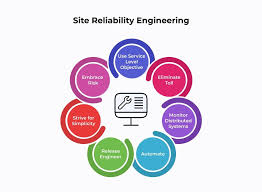
Applying Site Reliability Engineering (SRE) principles to modern infrastructure helps organizations build highly reliable, scalable, and resilient systems in increasingly complex digital environments. By integrating software engineering practices into IT operations, SRE focuses on automation, monitoring, incident response, and performance optimization to ensure systems remain stable while supporting rapid innovation. As businesses rely more on cloud-native architectures and distributed systems, adopting SRE practices enables teams to reduce downtime, improve service reliability, and maintain consistent user experiences at scale.
In the modern digital economy, organizations rely heavily on software systems and online services to deliver value to customers. Applications must remain available, responsive, secure, and scalable even as user demand grows and infrastructure becomes increasingly complex. Traditional IT operations models often struggle to maintain these expectations because they rely heavily on manual processes and reactive problem-solving. This challenge led to the emergence of Site Reliability Engineering (SRE), a discipline that applies software engineering principles to infrastructure and operations in order to build highly reliable and scalable systems.
Site Reliability Engineering originated at Google as a way to manage the massive scale and complexity of its global services. Instead of treating operations as a purely administrative or support function, SRE treats infrastructure management as a software engineering problem. Engineers develop automated systems, monitoring frameworks, and reliability strategies that allow services to run with minimal human intervention. Over time, the principles of SRE have spread throughout the technology industry and are now widely adopted by organizations using cloud platforms such as Amazon Web Services, Microsoft Azure, and Google Cloud.
Modern infrastructure environments are fundamentally different from traditional data centers. Applications today are distributed across multiple servers, data centers, and geographic regions. Microservices architectures, container orchestration platforms, and serverless technologies have introduced greater flexibility but also greater operational complexity. With hundreds or even thousands of services interacting with one another, the risk of failures increases significantly. A single small issue in one component can cascade across an entire system if not properly managed. Site Reliability Engineering addresses this challenge by introducing a systematic approach to reliability, automation, and operational excellence.
At the heart of SRE is the concept that reliability must be measured and managed through clearly defined metrics. Instead of relying on vague definitions such as “high availability,” SRE teams define measurable objectives that determine whether a system is performing as expected. These objectives are often expressed through service level indicators, service level objectives, and service level agreements. Service level indicators represent specific metrics that reflect the health of a service, such as request latency, error rates, throughput, and system uptime. Service level objectives define the target performance levels that the system must achieve over a given period. For example, an application may aim to maintain 99.9 percent availability or respond to requests within a specified latency threshold. Service level agreements represent contractual commitments between service providers and users regarding performance expectations.
By establishing measurable reliability targets, organizations gain the ability to objectively evaluate the health of their infrastructure. This approach helps engineering teams make informed decisions about system improvements, scaling strategies, and operational priorities. When systems consistently meet their objectives, teams can focus on innovation and feature development. When systems fall short of their targets, engineers can investigate the underlying causes and implement corrective measures.
Another fundamental principle of Site Reliability Engineering is the management of operational risk through the concept of error budgets. An error budget represents the acceptable level of system unreliability within a given period. Rather than aiming for perfect uptime, which is often unrealistic and prohibitively expensive, organizations define a reasonable tolerance for failure. For instance, if a system has a service level objective of 99.9 percent availability, the remaining 0.1 percent represents the allowable downtime or failure margin. This margin becomes the error budget.
Error budgets serve as a bridge between development teams and operations teams. When systems operate within their reliability targets, development teams are free to release new features and make architectural improvements. However, when the error budget is exhausted due to excessive downtime or failures, the focus shifts toward stabilizing the system rather than introducing additional changes. This model encourages a balanced approach between innovation and reliability, ensuring that rapid development does not compromise system stability.
Automation is another core pillar of Site Reliability Engineering. Modern infrastructure environments often contain thousands of servers, containers, and services that must be configured, monitored, and maintained. Manual management of such environments is both inefficient and error-prone. SRE promotes the use of automation to eliminate repetitive operational tasks and reduce the likelihood of human error.
Infrastructure as code is one of the key technologies that enable this automation. With infrastructure as code, system configurations are defined using programmable templates that can be version-controlled and deployed automatically. This approach allows organizations to create consistent environments across development, testing, and production systems. It also simplifies the process of scaling infrastructure resources in response to changing workloads.
Continuous integration and continuous delivery pipelines further enhance automation within modern infrastructure environments. These pipelines automatically build, test, and deploy software changes, ensuring that updates can be released quickly while maintaining system stability. Automated testing and validation mechanisms help detect issues before they reach production environments, reducing the risk of service disruptions.
Monitoring and observability are equally critical components of Site Reliability Engineering. In complex distributed systems, failures can occur in unexpected ways. Without proper visibility into system behavior, diagnosing and resolving these issues becomes extremely difficult. SRE teams implement comprehensive monitoring systems that track metrics related to system performance, resource utilization, and application behavior.
Observability extends beyond traditional monitoring by providing deeper insights into how systems operate internally. Through techniques such as distributed tracing, structured logging, and advanced telemetry, engineers can analyze the interactions between different services and identify performance bottlenecks or failure points. This level of visibility enables teams to detect anomalies early and respond to incidents more effectively.
Incident management is another area where SRE principles significantly improve operational reliability. Even with the best design and automation strategies, failures are inevitable in large-scale systems. What distinguishes reliable organizations is not the absence of failures but their ability to respond quickly and recover efficiently. SRE introduces structured incident response processes that ensure engineers can identify, diagnose, and resolve issues in a systematic manner.
Post-incident analysis is an essential component of this process. After a service disruption occurs, teams conduct detailed reviews to understand the root causes of the failure and identify opportunities for improvement. These analyses are typically blameless, focusing on systemic issues rather than individual mistakes. By learning from incidents and implementing preventive measures, organizations gradually improve the resilience of their infrastructure.
Capacity planning also plays a critical role in maintaining reliable infrastructure. As user demand grows, systems must be able to handle increased workloads without experiencing performance degradation. SRE teams analyze usage patterns and historical data to forecast future capacity requirements. By proactively scaling infrastructure resources, organizations can avoid performance bottlenecks and maintain consistent service quality.
The adoption of cloud computing platforms has further strengthened the role of Site Reliability Engineering in modern infrastructure management. Cloud environments provide scalable resources, managed services, and global distribution capabilities that enable organizations to build highly resilient architectures. However, these environments also introduce new challenges related to distributed networking, service dependencies, and dynamic scaling. SRE practices help organizations manage these complexities by implementing standardized deployment models, automated scaling strategies, and robust monitoring frameworks.
Modern infrastructure often relies on containerization technologies and orchestration platforms to manage application workloads efficiently. Container platforms allow applications to run in isolated environments that can be deployed rapidly across multiple servers. Orchestration systems automate the scheduling, scaling, and management of these containers, ensuring that applications remain available even when individual nodes fail. SRE principles guide the design and operation of these platforms to ensure reliability, scalability, and operational efficiency.
Another important aspect of SRE is the continuous improvement of system reliability through engineering innovation. Rather than relying solely on reactive troubleshooting, SRE teams actively develop tools, frameworks, and automation systems that enhance operational efficiency. These innovations may include automated rollback mechanisms, intelligent alerting systems, and self-healing infrastructure that can detect and recover from failures without human intervention.
The cultural impact of Site Reliability Engineering is just as significant as its technical contributions. SRE encourages collaboration between development and operations teams by aligning their goals around system reliability and user experience. Instead of operating in isolated silos, engineers work together to design systems that are both innovative and resilient. This collaborative approach helps organizations deliver new features faster while maintaining high levels of service quality.
As digital services continue to expand and global user expectations increase, the importance of reliability engineering will only grow. Organizations that adopt SRE principles gain a strategic advantage by building infrastructure that can adapt to rapid technological change while maintaining consistent performance. These organizations are better equipped to handle large-scale traffic spikes, unexpected system failures, and evolving security threats.
The future of infrastructure management will likely involve even deeper integration between automation, artificial intelligence, and reliability engineering. Predictive analytics may allow systems to anticipate failures before they occur, enabling proactive maintenance and resource optimization. Autonomous infrastructure systems could automatically adjust configurations, scale resources, and resolve incidents with minimal human involvement.
Despite these technological advancements, the fundamental philosophy of Site Reliability Engineering will remain the same. Reliability is not achieved through rigid control or excessive caution, but through intelligent system design, continuous measurement, and thoughtful risk management. By embracing automation, defining measurable reliability goals, and fostering a culture of collaboration and learning, organizations can build infrastructure that supports the demands of the modern digital world.
Applying Site Reliability Engineering principles to modern infrastructure ultimately transforms the way organizations approach system operations. It replaces manual, reactive processes with automated, data-driven strategies that prioritize reliability and scalability. In doing so, it empowers engineering teams to focus on innovation while ensuring that critical services remain stable and accessible to users around the world.