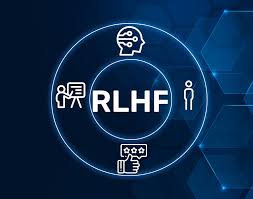
Reinforcement Learning from Human Feedback (RLHF) has become one of the most powerful techniques for shaping modern AI systems to behave safely, ethically, and in alignment with real human needs. This blog explores how RLHF works, why it is critical for preventing harmful or unintended AI behavior, and how human evaluators help guide models toward better decision-making. We break down the training pipeline, key challenges, emerging research, and real industry applications—showing how RLHF helps build AI systems that are more trustworthy, adaptable, and aligned with user expectations.
Reinforcement Learning from Human Feedback (RLHF) has become one of the most important breakthroughs in the development of modern artificial intelligence systems. As AI models grow more powerful, they require more sophisticated techniques to ensure that their behavior remains safe, predictable, and aligned with what humans actually want. RLHF bridges the gap between raw model capability and responsible real-world behavior by teaching AI systems to learn not only from data, but from human preferences, judgements, and values.
At its core, RLHF addresses a fundamental challenge in AI development: the fact that large models trained purely on massive datasets do not inherently understand human intentions. They can predict patterns extremely well, but they do not naturally distinguish between helpful and harmful responses, ethical or unethical behavior, or nuanced interpretations. RLHF introduces a human-driven mechanism that shifts AI from mere pattern recognition to context-aware decision-making. This method has become an essential part of ensuring AI systems operate safely across high-stakes environments such as healthcare, finance, education, cybersecurity, and personal digital assistance.
The RLHF process begins by taking a pretrained model—usually a large language model—and giving it examples of ideal behavior created by human experts. These examples act as guiding demonstrations of how the model should respond in different situations. Over time, as the model practices generating answers, human evaluators rank its responses by comparing them to what a safe, accurate, and responsible answer should look like. These rankings then help train a reward model, which serves as an internal scoring engine that determines whether a future output is desirable. The AI then uses reinforcement learning to continually optimize its behavior toward producing responses that earn higher reward scores—scores that come directly from human judgement.
One of the most significant contributions of RLHF is its ability to reduce harmful or unsafe outputs. Traditional models may generate toxic language, misinformation, biased predictions, or instructions that could enable risky behavior. RLHF fine-tunes the model to avoid these pitfalls by grounding its reward mechanism in human safety expectations. Instead of simply predicting the next word, the RLHF-trained model learns to weigh the social and ethical implications of what it outputs. This is critical in maintaining trust and reliability in AI-assisted environments.
Another major advantage of RLHF is improved user alignment. Alignment refers to how closely an AI system understands and responds according to a user’s intention. Without alignment, models may give irrelevant, overly literal, or misinterpreted responses. Through human feedback loops, the model grows better at inferring what the user *means*, not just what they *say*. This makes interactions smoother, more intuitive, and more helpful. Aligned AI systems are able to provide context-aware suggestions, adapt to user preferences, and respect boundaries—whether these boundaries are ethical, cultural, or operational.
As AI systems are deployed globally, RLHF also plays an important role in promoting cultural awareness and reducing unintended bias. Human feedback can come from diverse evaluators, helping the model learn a wider range of acceptable behaviors and avoid reinforcing stereotypes or misrepresentation. This diversification makes AI technologies more inclusive and suitable for international use.
Furthermore, RLHF is essential for AI safety in fields where accuracy and accountability matter deeply. In cybersecurity, for example, an aligned AI system is more capable of identifying anomalous behavior without generating false alarms or recommending unsafe mitigation steps. In healthcare, RLHF prevents models from providing dangerous medical advice. In education and finance, it ensures clarity, reliability, and fairness.
The development process for RLHF is highly iterative. As real users interact with the model, the feedback cycle continues. New data is collected, new reward models are refined, and the AI evolves to improve its ability to meet real-world expectations. This continuous learning cycle strengthens safety and alignment over time, making the AI more robust and responsible. It transforms AI from a passive tool into a human-guided system that grows more intelligent and trustworthy with each iteration.
Despite its advantages, RLHF is not a perfect solution. It still depends heavily on the quality of the human feedback provided. Biases or errors in judgement from human evaluators can influence the reward model. Additionally, RLHF requires significant computational resources and expert oversight, which make the method complex to scale. However, ongoing advancements continue to improve these limitations. New research fields such as scalable oversight, automated feedback generation, and constitutional AI aim to minimize human labor while improving the model’s reasoning and ethical grounding.
Looking ahead, RLHF will remain a foundational pillar of AI safety research. As AI systems become more autonomous and capable of performing complex tasks, the need for alignment grows even more urgent. Future AI models will rely on more sophisticated forms of human feedback, including multimodal cues such as images, audio, gestures, and emotional tone. This evolution will push RLHF beyond simply optimizing text responses—it will become a broader framework for designing AI systems that reason, interact, and make decisions with an understanding of human values.
In a technological landscape where AI influences nearly every aspect of daily life, from digital assistants and customer support bots to advanced robotics and predictive analytics, ensuring safety and alignment is not optional—it is essential. RLHF is the mechanism that makes this possible. It transforms artificial intelligence from a system that merely outputs information into one that collaborates with humans, respects boundaries, and understands real-world expectations.
Using RLHF to improve AI safety and user alignment is not just a technical innovation; it represents a new philosophy of AI development. It emphasizes partnership between humans and machines, guided growth instead of uncontrolled capability, and a future where AI systems enhance human potential without compromising safety or ethics. As the technology continues to mature, RLHF will remain at the heart of trustworthy, responsible, and human-centered artificial intelligence.