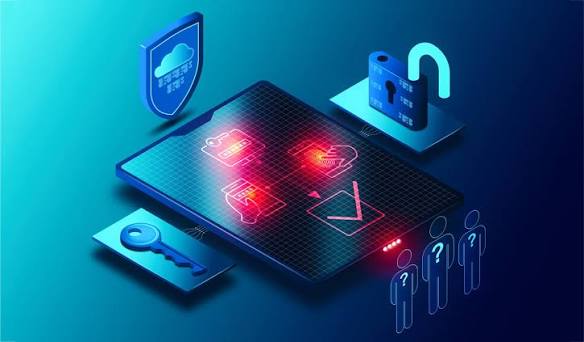
In today's rapidly evolving digital landscape, secure authentication is no longer just an IT requirement—it is the first and most critical line of defense against cyber threats. As organizations increasingly rely on cloud services, remote work, and interconnected applications, verifying the identity of users has become essential to protecting sensitive data and critical systems. This article explores why secure authentication forms the backbone of modern cybersecurity, examines the latest authentication technologies and best practices, and explains how businesses can strengthen their security posture by implementing robust identity verification strategies.
The modern digital world is built on connectivity. Every day, billions of people access online banking platforms, healthcare portals, government services, enterprise applications, cloud environments, social media platforms, educational systems, and countless other digital services. Behind every login screen is a critical security process that determines whether a user should be granted access to valuable information or denied entry. This process, known as authentication, has become one of the most important pillars of cybersecurity. As cyber threats continue to evolve in complexity and frequency, organizations have come to realize that secure authentication is not simply a technical feature but the very foundation upon which modern cybersecurity is built.
Authentication is the process of verifying the identity of a user, device, or system before granting access to digital resources. It answers one fundamental question: "Are you really who you claim to be?" While this may appear to be a straightforward concept, the technologies, policies, and security controls behind authentication have become increasingly sophisticated as attackers develop new methods to compromise digital identities. Every successful cyberattack begins with an attempt to bypass or defeat authentication mechanisms. Whether through stolen passwords, phishing campaigns, malware, credential stuffing, brute-force attacks, or insider threats, attackers continuously target the identity layer because gaining legitimate access often allows them to avoid triggering traditional security defenses.
For decades, passwords served as the primary method of authentication across digital systems. Users created usernames and passwords to protect their accounts, while organizations relied on these credentials to control access to sensitive information. Although passwords represented a significant advancement during the early years of computing, they are no longer sufficient as a standalone security measure. Human behavior has exposed many weaknesses in password-based authentication. People frequently reuse passwords across multiple accounts, create weak or predictable combinations, store passwords insecurely, or fall victim to phishing attacks that trick them into revealing their credentials. As a result, compromised passwords continue to be one of the leading causes of cybersecurity incidents worldwide.
The expansion of cloud computing has dramatically increased the importance of secure authentication. Modern enterprises no longer operate solely within protected corporate networks. Employees now access applications from home offices, airports, hotels, mobile devices, and public internet connections. Organizations increasingly depend on Software-as-a-Service (SaaS) platforms, cloud storage, remote collaboration tools, and virtual infrastructure hosted by multiple cloud providers. Traditional network boundaries have effectively disappeared, making identity the new security perimeter. Rather than focusing exclusively on protecting networks, organizations must now ensure that every user requesting access can be authenticated with a high degree of confidence regardless of their location or device.
The rapid growth of digital transformation initiatives has further elevated the role of authentication in enterprise security. Businesses are integrating artificial intelligence, automation, mobile technologies, Internet of Things (IoT) devices, and cloud-native applications into their daily operations. Every connected device, application, service, and API introduces additional identities that require secure authentication. Modern cybersecurity is no longer concerned only with authenticating human users. Machines, applications, containers, cloud workloads, robotic process automation systems, and artificial intelligence agents must also authenticate themselves securely before interacting with enterprise systems. Managing these non-human identities has become one of the fastest-growing challenges in cybersecurity.
Cybercriminals understand that compromising user identities is often easier than exploiting highly secured infrastructure. Instead of attacking firewalls directly, attackers frequently target employees through phishing emails, fraudulent websites, fake login portals, malicious mobile applications, and sophisticated social engineering campaigns. Once valid credentials are obtained, attackers may log into systems as legitimate users, making malicious activities difficult to detect. This approach allows them to move through networks, access confidential information, escalate privileges, install ransomware, or exfiltrate sensitive data while appearing to operate as authorized users. The growing popularity of identity-based attacks demonstrates why authentication remains the primary line of defense against unauthorized access.
One of the most significant advancements in authentication security has been the widespread adoption of Multi-Factor Authentication (MFA). Unlike traditional password-only authentication, MFA requires users to provide two or more independent forms of verification before access is granted. These factors generally include something the user knows, such as a password or PIN; something the user possesses, such as a smartphone or hardware security key; and something the user is, such as a fingerprint, facial recognition, or another biometric characteristic. Even if an attacker successfully steals a user's password, they are unlikely to possess the additional authentication factors required to complete the login process. This dramatically reduces the likelihood of unauthorized access and has become one of the most effective methods for preventing account compromise.
Biometric authentication has also transformed modern identity verification. Fingerprint recognition, facial recognition, iris scanning, voice recognition, and behavioral biometrics provide authentication methods that are significantly more difficult to duplicate than traditional passwords. Smartphones, laptops, banking applications, and enterprise security systems increasingly rely on biometric technologies because they offer both enhanced security and improved user convenience. However, biometric authentication must still be implemented responsibly, with appropriate encryption, privacy protections, and secure storage of biometric templates to prevent misuse or unauthorized disclosure.
The emergence of passwordless authentication represents another major milestone in cybersecurity. Passwordless authentication eliminates the traditional password altogether, replacing it with more secure methods such as cryptographic security keys, biometric verification, mobile authenticators, and public-key cryptography. Organizations adopting passwordless technologies reduce the risks associated with password theft, credential reuse, phishing attacks, and password management while simultaneously improving user experience. As standards such as FIDO2 and WebAuthn gain widespread industry support, passwordless authentication is expected to become increasingly common across enterprise environments.
Identity and Access Management (IAM) systems have become central to enterprise authentication strategies. IAM platforms provide centralized management of user identities, authentication methods, access permissions, and lifecycle management across multiple systems and applications. Rather than maintaining separate login credentials for every application, organizations increasingly implement Single Sign-On (SSO) solutions that allow users to authenticate once and securely access multiple authorized services. Single Sign-On not only improves productivity by reducing password fatigue but also strengthens security by enabling centralized policy enforcement, monitoring, and access control.
Secure authentication extends beyond verifying identities during login. Continuous authentication has emerged as an important security concept that continuously evaluates user behavior throughout an active session. Instead of assuming that authentication remains valid indefinitely after login, continuous authentication monitors contextual signals such as typing patterns, mouse movements, geographic location, device health, network characteristics, application usage, and behavioral anomalies. If unusual activity suggests account compromise, additional verification may be required or the session may be terminated automatically. This adaptive approach significantly improves security while minimizing unnecessary interruptions for legitimate users.
The Zero Trust security model has fundamentally changed how organizations approach authentication. Traditional security models assumed that users inside corporate networks could generally be trusted, while outsiders required stricter verification. Zero Trust rejects this assumption entirely by adopting the principle of "never trust, always verify." Every authentication request is evaluated continuously based on identity, device posture, location, network conditions, risk factors, and contextual intelligence. Access is granted only after sufficient verification, regardless of whether the request originates from inside or outside the organization's network. Secure authentication forms the cornerstone of Zero Trust because every subsequent security decision depends upon accurately establishing user identity.
Artificial intelligence has become increasingly important in strengthening authentication systems. AI-powered authentication platforms analyze enormous volumes of behavioral and contextual data to identify suspicious login attempts in real time. Machine learning algorithms can detect impossible travel scenarios, unusual login times, unfamiliar devices, abnormal typing behavior, or geographic inconsistencies that may indicate compromised credentials. By analyzing patterns that humans would struggle to identify manually, AI significantly enhances the accuracy and effectiveness of authentication systems while reducing false positives that inconvenience legitimate users.
Despite technological advancements, phishing remains one of the greatest threats to authentication security. Cybercriminals continuously develop increasingly convincing phishing campaigns designed to trick users into revealing passwords, verification codes, or authentication tokens. Modern phishing attacks often mimic legitimate corporate websites, banking portals, cloud applications, or government services with remarkable accuracy. Some attacks even bypass traditional MFA using sophisticated techniques such as session hijacking, adversary-in-the-middle attacks, or token theft. Combating these evolving threats requires a combination of secure authentication technologies, employee awareness training, anti-phishing technologies, and continuous monitoring.
The protection of privileged accounts represents another critical aspect of authentication security. Administrative accounts possess elevated permissions capable of modifying configurations, managing infrastructure, accessing sensitive databases, and controlling enterprise systems. If attackers compromise privileged accounts, they may gain unrestricted access across entire environments. Privileged Access Management (PAM) solutions help organizations secure these high-risk accounts through strong authentication, session monitoring, credential vaulting, just-in-time access, approval workflows, and detailed auditing. Protecting privileged identities is essential for limiting the impact of both external attacks and insider threats.
Secure authentication also plays a vital role in protecting application programming interfaces (APIs), which serve as communication channels between modern applications. APIs enable cloud services, mobile applications, payment systems, healthcare platforms, and enterprise software to exchange data seamlessly. However, exposed APIs frequently become attractive targets for attackers seeking unauthorized access to backend systems. Strong API authentication using OAuth 2.0, OpenID Connect, mutual Transport Layer Security, signed tokens, and short-lived access credentials helps ensure that only trusted applications and authorized users can interact with protected services.
Regulatory compliance further reinforces the importance of secure authentication. Governments and industry regulators increasingly require organizations to implement strong identity verification mechanisms to protect sensitive information. Regulations such as the General Data Protection Regulation (GDPR), the Health Insurance Portability and Accountability Act (HIPAA), the Payment Card Industry Data Security Standard (PCI DSS), and numerous financial regulations establish strict requirements regarding authentication, access controls, audit logging, and identity management. Failure to implement secure authentication may expose organizations to significant financial penalties, legal consequences, regulatory investigations, and reputational damage.
The Internet of Things has introduced millions of additional devices requiring secure authentication. Smart manufacturing systems, connected vehicles, medical devices, industrial sensors, surveillance cameras, smart home technologies, and critical infrastructure all rely upon digital identities to communicate with centralized systems. Weak authentication within IoT environments may allow attackers to compromise devices, manipulate operational technology, disrupt essential services, or launch distributed denial-of-service attacks. Secure device identity management, certificate-based authentication, firmware integrity verification, and hardware security modules have become increasingly important for protecting these expanding ecosystems.
Cloud computing environments further demonstrate why authentication serves as the foundation of cybersecurity. Cloud providers invest heavily in securing physical infrastructure, networks, and virtualization platforms, but customers remain responsible for securing user identities under the shared responsibility model. Mismanaged authentication, excessive permissions, exposed credentials, or poorly configured identity services remain among the leading causes of cloud security breaches. Organizations must therefore implement strong identity governance, least privilege access, conditional authentication, continuous monitoring, and automated credential management to protect cloud resources effectively.
The rise of remote and hybrid work has permanently changed organizational authentication requirements. Employees now connect from diverse locations using personal devices, public networks, and multiple cloud services. Traditional perimeter-based security models are no longer sufficient for protecting distributed workforces. Secure authentication enables organizations to verify identities consistently regardless of where employees work while balancing security with user convenience. Adaptive authentication technologies evaluate contextual risk factors before granting access, ensuring security remains proportional to the level of risk associated with each login attempt.
User experience has become an increasingly important consideration in authentication design. Historically, organizations often viewed security and usability as competing priorities. Complex authentication processes frustrated users, leading them to adopt insecure workarounds such as writing down passwords or reusing credentials across multiple systems. Modern authentication solutions seek to eliminate this trade-off by providing seamless yet highly secure login experiences through biometrics, passwordless authentication, adaptive verification, and intelligent risk-based authentication. When security becomes convenient, users are more likely to follow recommended practices consistently.
As organizations continue embracing digital transformation, authentication strategies must evolve continuously to address emerging threats. Artificial intelligence, quantum computing, decentralized identity systems, blockchain technologies, and privacy-enhancing cryptographic techniques will all influence the future of authentication. Researchers are developing quantum-resistant authentication algorithms capable of protecting identities against future quantum computing attacks. Decentralized identity solutions aim to give individuals greater control over their digital credentials while reducing dependence on centralized identity providers. Behavioral biometrics, AI-driven authentication, and continuous risk assessment will likely become increasingly integrated into enterprise identity platforms over the coming years.
Ultimately, secure authentication is far more than a login process or a security checkpoint. It is the cornerstone upon which every other cybersecurity control depends. Firewalls, encryption, endpoint protection, intrusion detection systems, cloud security platforms, and network defenses all rely upon the assumption that authenticated users are genuinely who they claim to be. If authentication fails, every subsequent layer of defense becomes significantly less effective. This reality explains why cybercriminals relentlessly target identities and why organizations continue investing heavily in modern authentication technologies.
In an era where digital identities grant access to financial assets, intellectual property, healthcare records, government services, cloud infrastructure, and critical business operations, authentication has become one of the most valuable security controls available. Organizations that prioritize secure authentication not only reduce their exposure to cyber threats but also strengthen customer trust, improve regulatory compliance, enhance operational resilience, and create a secure foundation for innovation. As technology continues to evolve and cyber threats become increasingly sophisticated, secure authentication will remain the essential first line of defense and the enduring foundation of modern cybersecurity.